
Site Specific Risk Assessment
Proven Expertise for Regulatory Ready Solutions
Complex projects often find that standard risk models fall short of capturing site specific conditions critical for understanding the potential risks. Integral delivers comprehensive site-specific risk assessments through multidisciplinary toxicologists, biologists, ecologists, and public health specialists. Our approach starts with a well-defined conceptual site model and integrates toxicology, multi-media environmental data, human exposure models, and ecological modeling to yield accurate and defensible risk assessment results.
Technical Leaders
Miranda Henning, BCES Managing Principal, Business Director - Health and Ecology
Judi L. Durda Senior Principal
Patrick O. Gwinn Principal, Toxicology, Health, and Ecological Sciences
Damian V. Preziosi Managing Principal, Strategic Initiatives Director
Jen Lyndall, CERP, CSE Principal, Environmental Risk and Restoration
John R. Griffin Senior Consultant
Heather M. Summers Senior Consultant
Alexandra Meyers, MPH, BCES Consultant
Knowledge Share
Human Health Risk Characterization of PFAS Chemicals at a Superfund Site
Risk Assessment for Extended Phase-Out of Pentachlorophenol
Risk Assessment for PCBs in Soils at a Ranch
Ecological Risk Analysis for Benzalkonium Chloride, Benzethonium Chloride, and Chloroxylenol in U.S. Disinfecting and Sanitizing Products
Understanding PFAS Volatility and Potential Impact on Indoor Air Quality
Unraveling Sediment PCB Signatures in Disparate Data Sets for Source Allocation
Human Health Risk Assessment
When your project needs more than default cleanup levels, a site-specific risk assessment can help you define how clean is clean for your project. Whether the context is Superfund, RCRA, state regulatory programs or litigation, Integral’s comprehensive human health risk assessments combine exposure data, exposure pathway modeling, toxicological and bioavailabilty analyses to assess the potential for chemical exposure and the impacts on human health. And since cleanup levels are often risk-based, the use of a site-specific risk assessment generates cleanup levels that are appropriate for your project.
Key Capabilities:
- Multimedia exposure and risk assessments, including probabilistic approaches
- Review and analysis of toxicological literature to develop novel chemical dose-response assessments
- Experienced regulatory participation to move your project in a positive trajectory

Ecological Risk Assessment
We conduct ecological risk assessments to support a variety of regulatory and product stewardship needs. Clients turn to us for technically robust analyses, strategic thinking, and the very best communication—and this is what separates us from other firms. We use our deep understanding of ecological processes to develop appropriately scaled and targeted analyses to evaluate ecological risks and management options best suited to your project.
Key Capabilities:
- Robust habitat assessments to identify appropriate ecological receptors
- Identification of assessment and measurement endpoints that support a defensible, multi-line-of-evidence evaluation of ecological risk
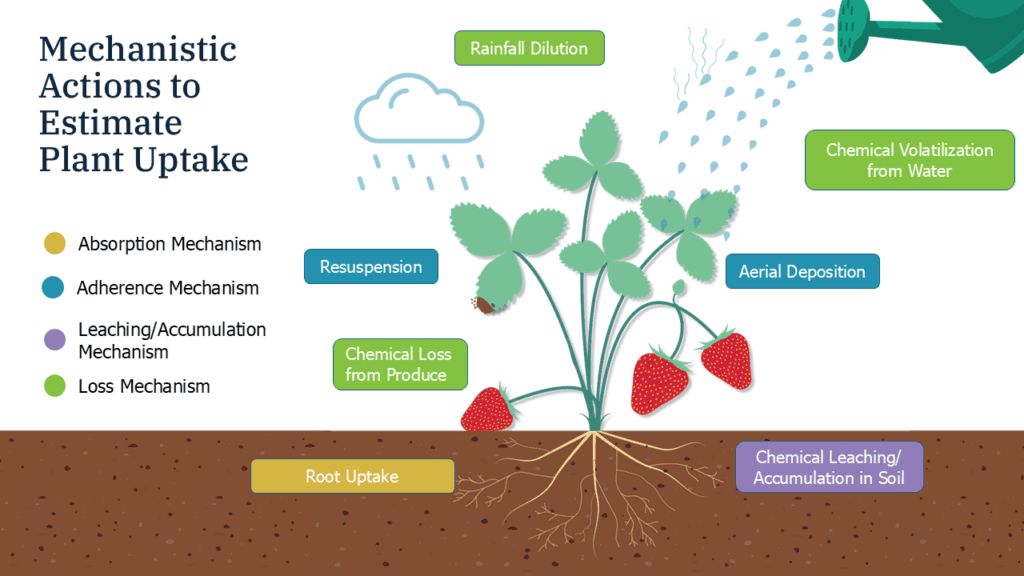
- Skilled in developing site-specific chemical uptake and food chain transfer factors
- Ecological community assessments to ground-truth other assessment findings

Litigation and Expert Services
Whether expert consultation or courtroom testimony is needed, Integral adds rigorous technical analysis, compelling opinions and testimony to matters where human health and the environment are critical.
Key Capabilities:
- Expert report, opinion, and witness testimony with proven track records in depositions and trials
- Rebuttal analysis and critique of opposing expert opinions and methodologies
- Technical strategy development grounded in toxicology, chemistry, environmental science, and exposure science

Risk Communication & Visualization
Integral developments straightforward risk communication materials such as interactive data applications, intuitive visuals, and tailored presentations to translate complex technical material into messaging that is understandable and actionable for regulators, stakeholders, and community groups.
- Interactive data applications and visuals that show how decisions are supported by the science, helping shorten review cycles and reduce regulatory uncertainty.
- Visual tools that build trust with stakeholders and community members by making technical risk information transparent and approachable.
- Clear, easy-to-follow presentations that help agencies grasp findings quickly and move risk-based remediation plans forward.
FAQs
Site specific risk assessments help to focus remediation costs by accurately reflecting potential exposures to humans and the environment. Site specific risk assessment is also necessary when understanding the likelihood of whether potential exposures contributed to observed or alleged health effects.
Site specific risk assessments should be considered when the basis for default cleanup values doesn’t align with your project. A misalignment of default cleanup levels and your project site can be due to the use of default exposure pathways or parameters that don’t accurately portray your project. A site-specific risk assessment can refocus remedial efforts on the media impacting the most important exposure pathways and do so in a way that is cost-effective.
No. Site specific risk assessments are used in any circumstance where evaluation of chemical exposure and potential toxicity are needed. Examples include evaluation of new chemical uses under TSCA, assessment of exposure and risk in a litigation, permitting of facility air emissions, and development of site-specific water quality criteria. If you are unsure whether site-specific risk assessment is right for your project, give us a call.